
About Us
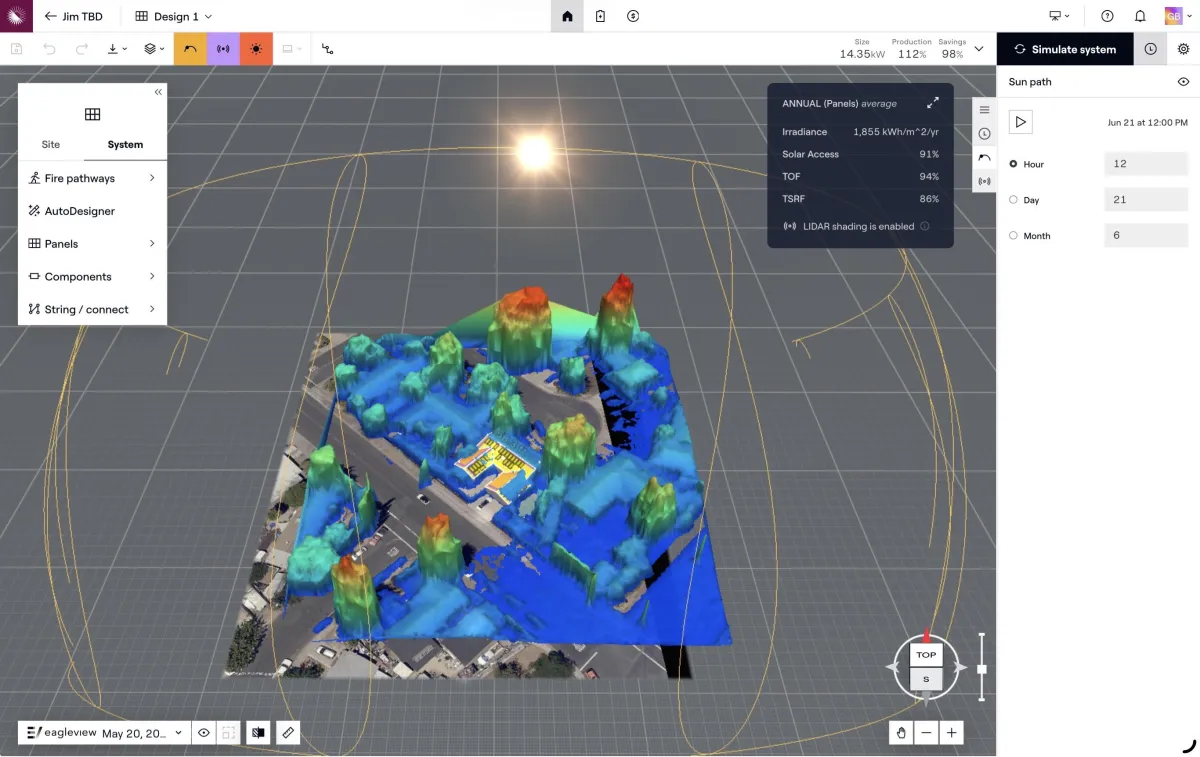
Professional Solar Design You Can Trust
Professional solar design is the foundation of knowing—before you commit—exactly how much you can save. A properly engineered system isn’t just about putting panels on a roof; it’s about analyzing your actual energy usage, your roof layout, shading, and PG&E’s time-of-use rates to build a system that performs where it matters most.
Clarity eliminates guesswork and gives you confidence that your investment is built to maximize savings, not just generate power.
Pulling the Proper Usage Data and Running Scenarios
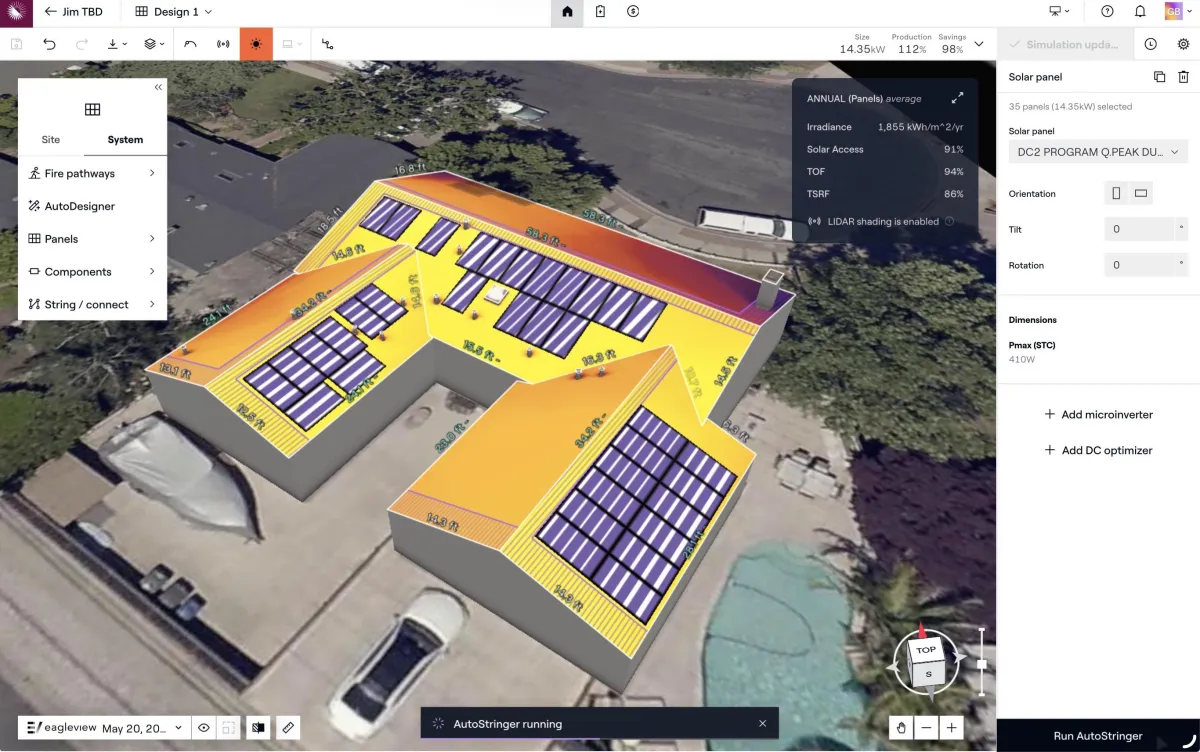
Accuracy really comes down to how precise the analysis is before anything gets installed. We use SolarFax to pull your actual utility data and then run multiple scenarios based on how and when you use electricity, along with PG&E’s peak rates. That allows us to design a system that’s tailored to your real usage—not a guess or a generic estimate.
By doing that, we can avoid the two biggest issues homeowners run into: getting hit with a large true-up because the system was undersized, or overbuilding and paying for more solar than you’ll ever benefit from. The goal is to land right in that sweet spot where your system is optimized to minimize your costs year after year, so you know exactly what to expect going in.
A Reliable Outcome
Properly Sizing Batteries
Attention to detail turns a good plan into a reliable outcome.
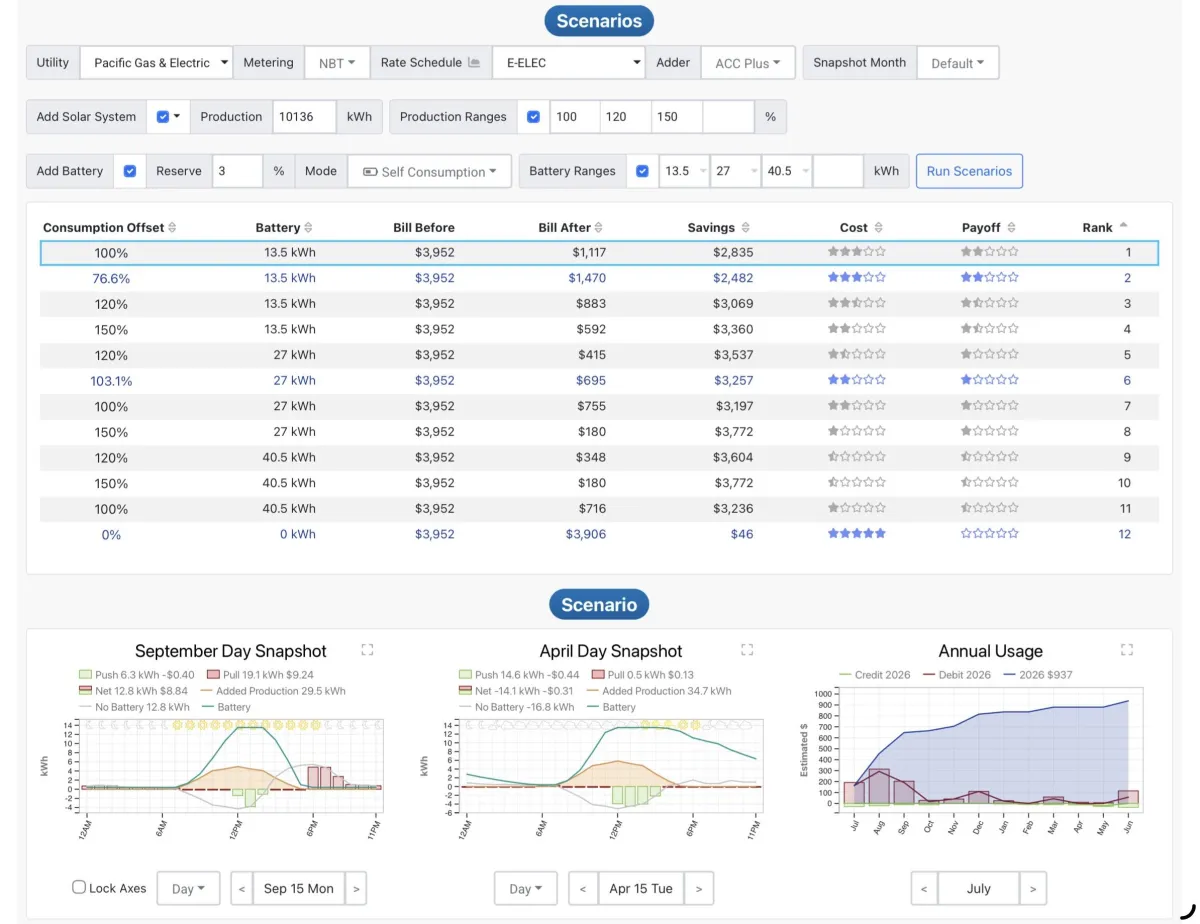
Too many solar proposals are just projections based on limited information. By using the way you used electricity by the hour for an entire year we will design a system that gives you an accurate proposal.
The right amount of batteries is based upon how much electric energy you need after the sun goes down. Some solar arrays will not collect much energy after 4PM. It depends if they are facing west, east or south (north facing solar arrays are very inefficient).
As an example, if you look below… this customer should have either two Tesla Powerwall 3s (13.5kWh each - total of 27kWh) installed or 30kWh of total storage with batteries that are modules at 5, 10 and 15kWh of power each.
The reason for two Tesla Powerwall 3s is because their summer usage is 18.2kWh for peak use and 8.9kWh used overnight. This totals 27.1kWh of power storage needed.
Once this customer switches to solar, they can also start to shift usage toward midday when they are creating the most solar power. Charge EV during the day, run pool pump during the day and try to cool/heat the house before peak hours when PG&E charges extreme rates for electric power.
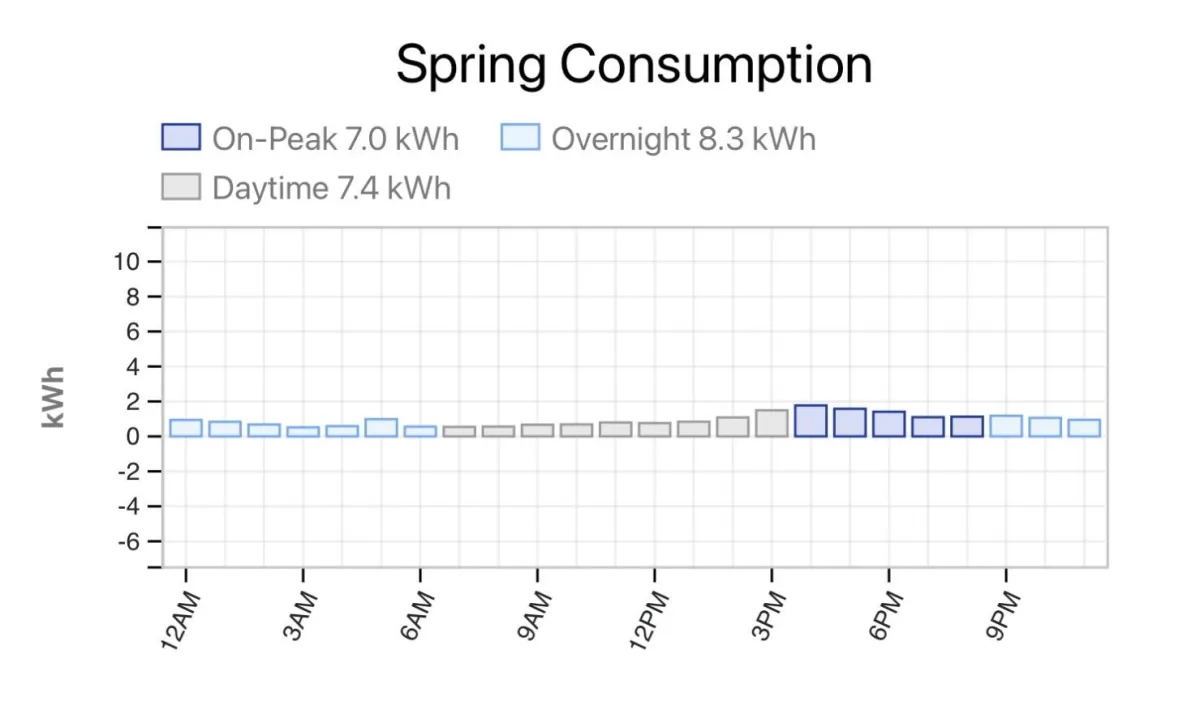
Spring
For peak and overnight consumption need 15kWh of battery power storage.
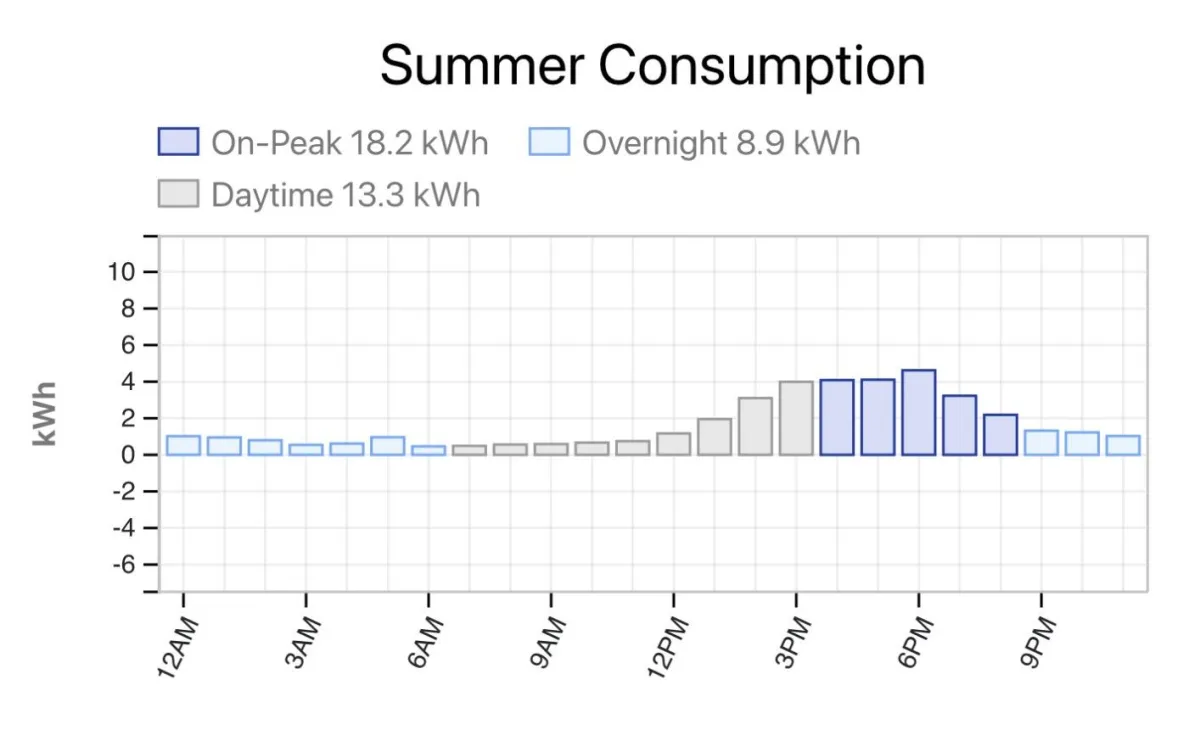
Summer
For peak and overnight consumption need 30kWh of battery power storage.
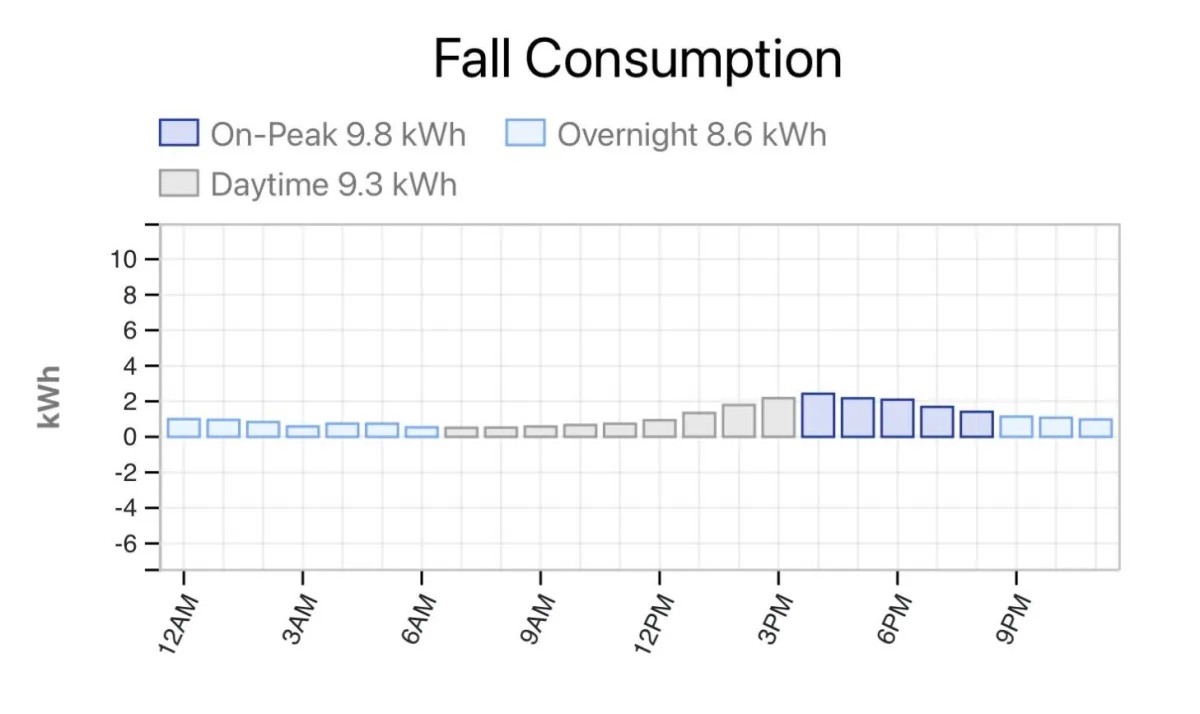
Fall
For peak and overnight consumption need 20kWh of battery power storage..
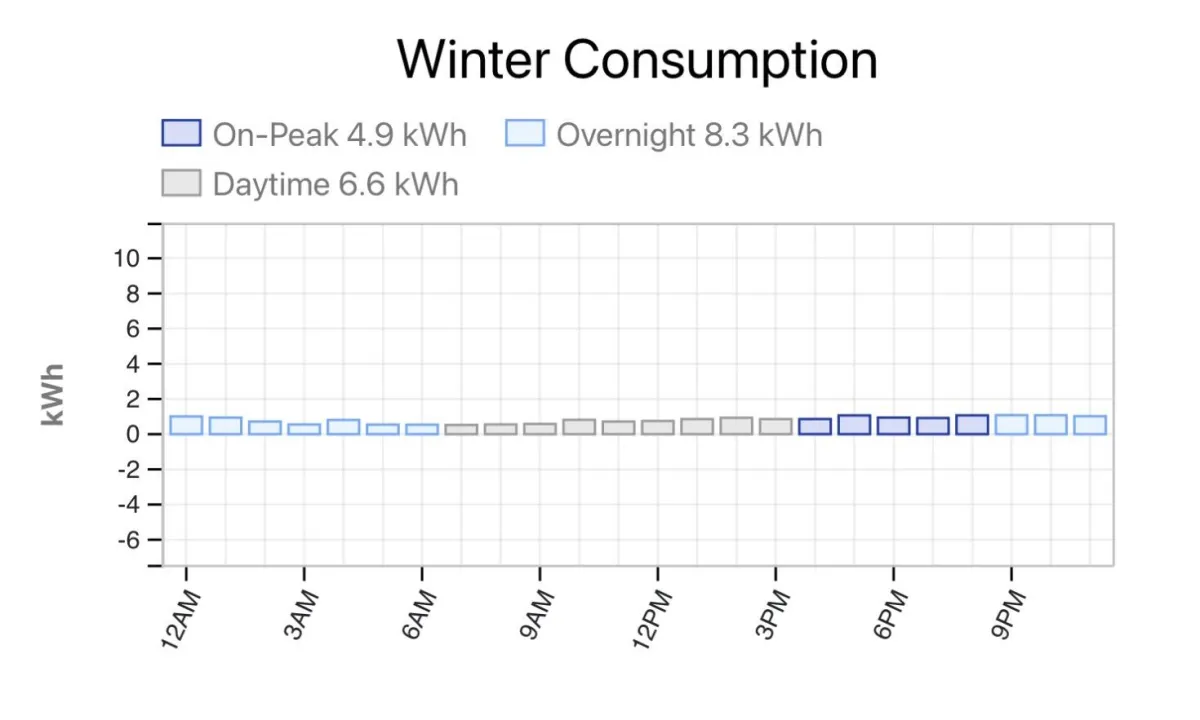
Winter
For peak and overnight consumption need 15kWh of battery power storage.
why choose us
Our Commitment to Excellence
A high quality solar project starts with a detailed analysis of how you use power and planning for future electric energy needs. Then optimally designing your solar system including the solar panels, inverters and batteries that give you the highest performance within your budget.
And lastly, hire the highest customer rated solar installation team in the East Bay.
Quick Links
© Copyright 2026 | All rights reserved.